Building a Game Boy emulator took me decades, and most of what I learnt along the way was about myself.Building a Game Boy emulator took me decades, and most of what I learnt along the way was about myself.
Growing up I never had the opportunity to own a Game Boy, but I was always fascinated by them.Growing up I never had the opportunity to own a Game Boy, but I was always fascinated by them.
I can’t have been more than 10 or 11 when I first caught the Pokémon anime on TV before school. It quickly became a full-blown obsession – a daily television ritual, watercolour art taped to my walls, and before long the Game Boy games that swept playgrounds worldwide. While my enthusiasm for the cartoon faded, my love for the games never did.I can’t have been more than 10 or 11 when I first caught the Pokémon anime on TV before school. It quickly became a full-blown obsession – a daily television ritual, watercolour art taped to my walls, and before long the Game Boy games that swept playgrounds worldwide. While my enthusiasm for the cartoon faded, my love for the games never did.
My family wasn’t wealthy, and a Game Boy was out of reach for me, but I found ways to play whenever I got the chance. Weekend visits to my cousin’s house were my most regular opportunity, although I could never overwrite his save. Starting from scratch every time eventually turned into speedruns: the whole game in an afternoon.My family wasn’t wealthy, and a Game Boy was out of reach for me, but I found ways to play whenever I got the chance. Weekend visits to my cousin’s house were my most regular opportunity, although I could never overwrite his save. Starting from scratch every time eventually turned into speedruns: the whole game in an afternoon.
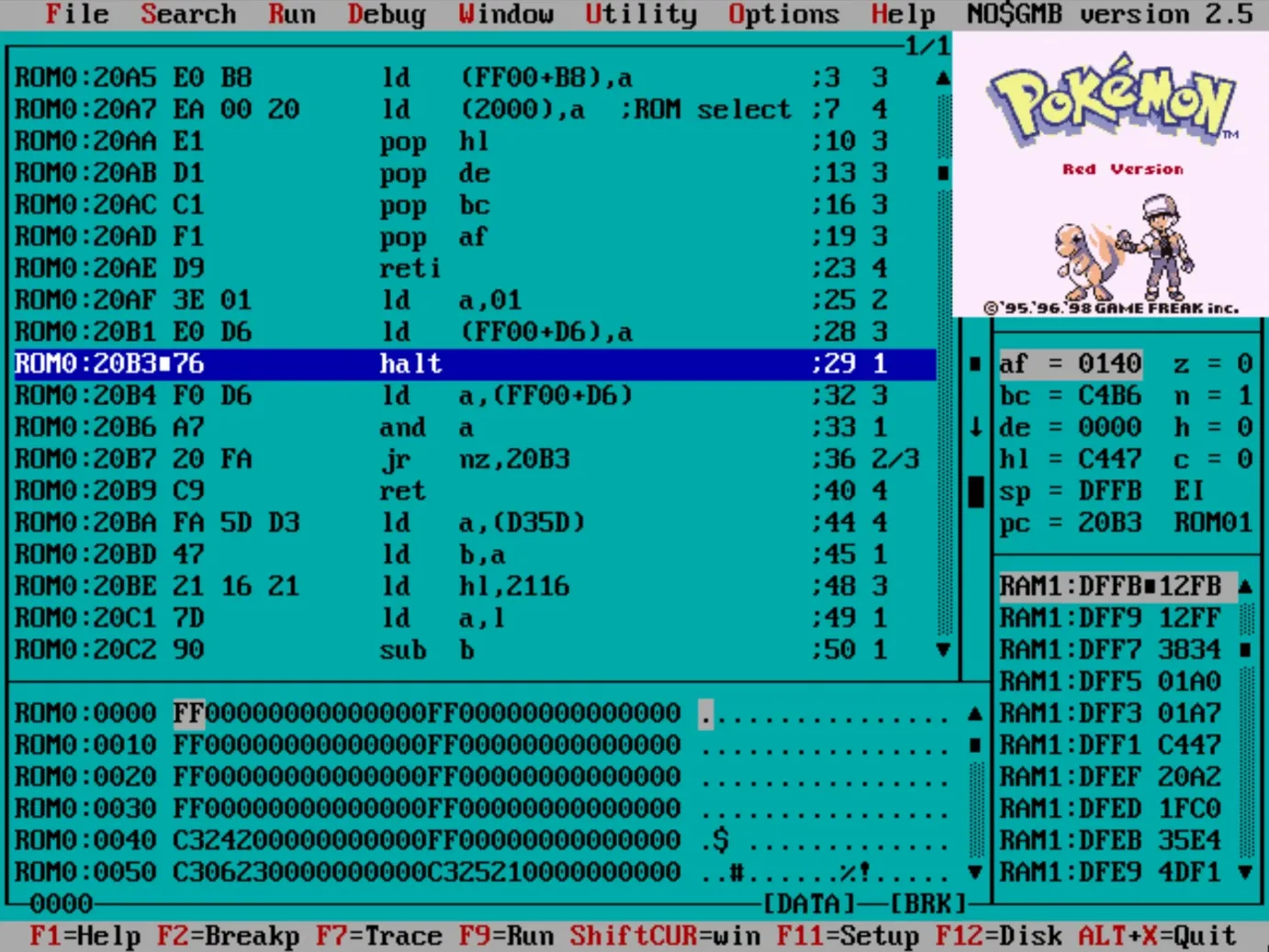
Pokémon is also what got me into emulation. We didn’t have a PC at home yet (we were still on an Amiga), so emulators didn’t mean I could play at home. But they did mean I could play in a lot more places, and friends were more than happy to have Pokémon running on their computers. The one that stuck with me was the old DOS version of NO$GMB. It could play Pokémon in colour, thanks to its Super Game Boy support, but what really fascinated me was that it showed all the assembly and the registers, right there on the screen.Pokémon is also what got me into emulation. We didn’t have a PC at home yet (we were still on an Amiga), so emulators didn’t mean I could play at home. But they did mean I could play in a lot more places, and friends were more than happy to have Pokémon running on their computers. The one that stuck with me was the old DOS version of NO$GMB. It could play Pokémon in colour, thanks to its Super Game Boy support, but what really fascinated me was that it showed all the assembly and the registers, right there on the screen.
NO$GMB 2.5 for DOS with Pokémon Red, captured again in DOSBox-X in 2026.
I’d been tinkering with code since I was quite young, and as a teenager I wanted to make an emulator of my own. I printed the Pan Docs, the go-to technical reference for the Game Boy, onto A4 sheets and worked my way through them.1 It was clear pretty quickly that they assumed knowledge I didn’t have, and I didn’t understand how to learn it. I had no idea where to start.I’d been tinkering with code since I was quite young, and as a teenager I wanted to make an emulator of my own. I printed the Pan Docs, the go-to technical reference for the Game Boy, onto A4 sheets and worked my way through them.1 It was clear pretty quickly that they assumed knowledge I didn’t have, and I didn’t understand how to learn it. I had no idea where to start.
I usually find a challenge enticing, but this one was a full wall. Building a Game Boy emulator became my white whale. I couldn’t do it then, but rather than dropping the desire, I just delayed it.I usually find a challenge enticing, but this one was a full wall. Building a Game Boy emulator became my white whale. I couldn’t do it then, but rather than dropping the desire, I just delayed it.
Things finally started to click at university, when I took a paper where we learnt MIPS assembly. For the first time I felt like I had the knowledge to actually build an emulator. I didn’t give it a proper go until after I’d graduated, though.Things finally started to click at university, when I took a paper where we learnt MIPS assembly. For the first time I felt like I had the knowledge to actually build an emulator. I didn’t give it a proper go until after I’d graduated, though.
There were a couple of attempts in my early twenties. Sometimes it was a way to explore a new language like D. Another time, when I was only working part time, I tried C++ to see how far I could get. Each time, the labour of emulating a whole CPU before getting any real feedback burned through my motivation very quickly.There were a couple of attempts in my early twenties. Sometimes it was a way to explore a new language like D. Another time, when I was only working part time, I tried C++ to see how far I could get. Each time, the labour of emulating a whole CPU before getting any real feedback burned through my motivation very quickly.
By 2014 I’d moved to Australia and was working in the industry. I was an experienced coder now, not a youngun with skill but no experience.By 2014 I’d moved to Australia and was working in the industry. I was an experienced coder now, not a youngun with skill but no experience.
Rust was the first systems language that had interested me in a while. I loved the power and speed of C++, but found it laborious to write. Rust looked interesting with its ideas around memory: memory safety, no garbage collector. It brought some high-level niceties to a low-level language, and it made a nice contrast to Go, which was gaining industry use at the time but didn’t appeal to my sensibilities.Rust was the first systems language that had interested me in a while. I loved the power and speed of C++, but found it laborious to write. Rust looked interesting with its ideas around memory: memory safety, no garbage collector. It brought some high-level niceties to a low-level language, and it made a nice contrast to Go, which was gaining industry use at the time but didn’t appeal to my sensibilities.
Rust had grabbed my interest, and the white whale had never gone away. If I was going to play around with a new systems language, a Game Boy emulator was the obvious choice. I named it after MissingNo., the glitch Pokémon from Red and Blue. It felt connected to what NO$GMB had shown me: the internals of the game bleeding through. The playground was full of rumours about trucks and Mews, but this one was real and weird and fascinating.Rust had grabbed my interest, and the white whale had never gone away. If I was going to play around with a new systems language, a Game Boy emulator was the obvious choice. I named it after MissingNo., the glitch Pokémon from Red and Blue. It felt connected to what NO$GMB had shown me: the internals of the game bleeding through. The playground was full of rumours about trucks and Mews, but this one was real and weird and fascinating.
I worked on Missingno for about two weeks in August 2014: reading the cartridge header, memory, the start of a CPU and a handful of its instructions. I enjoyed Rust and the progress I made, but it didn’t hold me. It wasn’t the right time in my life for that kind of dedicated effort.I worked on Missingno for about two weeks in August 2014: reading the cartridge header, memory, the start of a CPU and a handful of its instructions. I enjoyed Rust and the progress I made, but it didn’t hold me. It wasn’t the right time in my life for that kind of dedicated effort.
Knowledge wasn’t what had been stopping me, and it hadn’t been since university. What I still had to learn was myself: what motivates me, how to manage my energy and focus over time, and the strengths and limitations of my mind and body.Knowledge wasn’t what had been stopping me, and it hadn’t been since university. What I still had to learn was myself: what motivates me, how to manage my energy and focus over time, and the strengths and limitations of my mind and body.
Every so often I’d come back to it. Rust had moved on each time, so the first job was always bringing the code up to date, and that took a while. Then I’d realise I had no idea what to tackle next, or how to find my way around the code base again. The history shows how short these visits were: a Wednesday morning in 2018, half an hour on a Tuesday evening in 2020.Every so often I’d come back to it. Rust had moved on each time, so the first job was always bringing the code up to date, and that took a while. Then I’d realise I had no idea what to tackle next, or how to find my way around the code base again. The history shows how short these visits were: a Wednesday morning in 2018, half an hour on a Tuesday evening in 2020.
In 2020, chronic health issues that had been in the background came to the foreground, and it threw my life out of whack. It took years to recover, and for a long time my working hours waxed and waned with my health. By 2022 I’d regained some control and wanted something mentally stimulating, so I came back again. This time it lasted a few weeks, and I got through a good chunk of the CPU’s instructions. Then it faded again. If I had the energy to spend on code, I spent it on work, not on hobby projects.In 2020, chronic health issues that had been in the background came to the foreground, and it threw my life out of whack. It took years to recover, and for a long time my working hours waxed and waned with my health. By 2022 I’d regained some control and wanted something mentally stimulating, so I came back again. This time it lasted a few weeks, and I got through a good chunk of the CPU’s instructions. Then it faded again. If I had the energy to spend on code, I spent it on work, not on hobby projects.
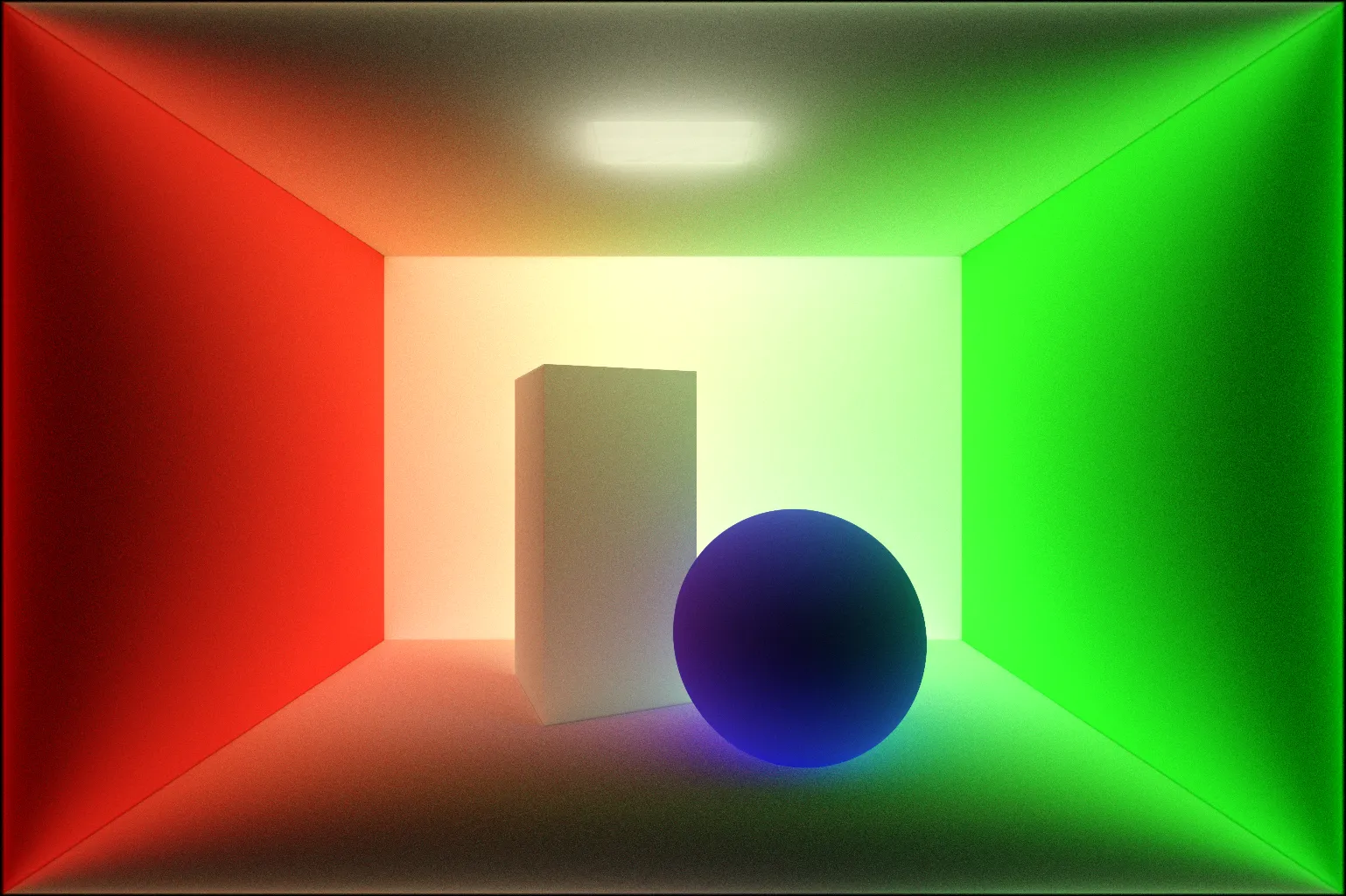
When I next felt the itch, it pointed in a new direction. Kea is a path tracer, a renderer that simulates light bouncing around a scene, written in Rust right down to the shaders. Within days I had my first triangle on screen, and a few weeks later it was path tracing. It wasn’t the biggest project in the world, but it was proof to myself that I could produce something on my own. It also taught me that visual results matter to me. Once something is on screen and evolving, the loop between work and feedback gets much shorter.When I next felt the itch, it pointed in a new direction. Kea is a path tracer, a renderer that simulates light bouncing around a scene, written in Rust right down to the shaders. Within days I had my first triangle on screen, and a few weeks later it was path tracing. It wasn’t the biggest project in the world, but it was proof to myself that I could produce something on my own. It also taught me that visual results matter to me. Once something is on screen and evolving, the loop between work and feedback gets much shorter.
A Cornell box rendered by Kea, from its README in November 2022.
In October 2023 I went to Ruby Retreat, a weekend away with other Ruby developers, held that year at Mt Cheeseman outside Christchurch. It was a bit of a last-minute homecoming to Aotearoa, and it was the right space for me. Nature soothes me and helps me think, I was there to code, and Missingno was the obvious project.In October 2023 I went to Ruby Retreat, a weekend away with other Ruby developers, held that year at Mt Cheeseman outside Christchurch. It was a bit of a last-minute homecoming to Aotearoa, and it was the right space for me. Nature soothes me and helps me think, I was there to code, and Missingno was the obvious project.
Over the weekend Missingno got video timing, interrupts, timers and a joypad, and then I started trying to work out how Tetris loads its tiles into memory. Another person at the retreat took a real interest in what I was doing, and telling him what I was up to and sharing the progress as it came was quite encouraging. By Sunday I had a working tile viewer, showing Tetris’s graphics straight out of video memory. It was the first time it actually felt like Missingno was emulating something I could see.Over the weekend Missingno got video timing, interrupts, timers and a joypad, and then I started trying to work out how Tetris loads its tiles into memory. Another person at the retreat took a real interest in what I was doing, and telling him what I was up to and sharing the progress as it came was quite encouraging. By Sunday I had a working tile viewer, showing Tetris’s graphics straight out of video memory. It was the first time it actually felt like Missingno was emulating something I could see.
Back home, I wrote a README (“A WIP gameboy emulator. Nothing playable yet.”) and moved the code around to make room for a UI. Then work and health took over again. I was lucky to have that job while my health wasn’t the greatest, but over time it became clear it was no longer the job I needed it to be. Missingno sat untouched for nearly a year and a half.Back home, I wrote a README (“A WIP gameboy emulator. Nothing playable yet.”) and moved the code around to make room for a UI. Then work and health took over again. I was lucky to have that job while my health wasn’t the greatest, but over time it became clear it was no longer the job I needed it to be. Missingno sat untouched for nearly a year and a half.
In April 2025 I was between jobs. I needed a mental outlet, and ideally one that could help with job hunting too. Kea already felt like something I could point to, but Missingno wasn’t there yet.In April 2025 I was between jobs. I needed a mental outlet, and ideally one that could help with job hunting too. Kea already felt like something I could point to, but Missingno wasn’t there yet.
This time I started differently, because debugging Missingno had always been frustrating. It could get stuck in a loop and give me no real feedback about what it was doing. I’d been relying on logging, but large logs are hard to spot patterns in, and full of noise.This time I started differently, because debugging Missingno had always been frustrating. It could get stuck in a loop and give me no real feedback about what it was doing. I’d been relying on logging, but large logs are hard to spot patterns in, and full of noise.
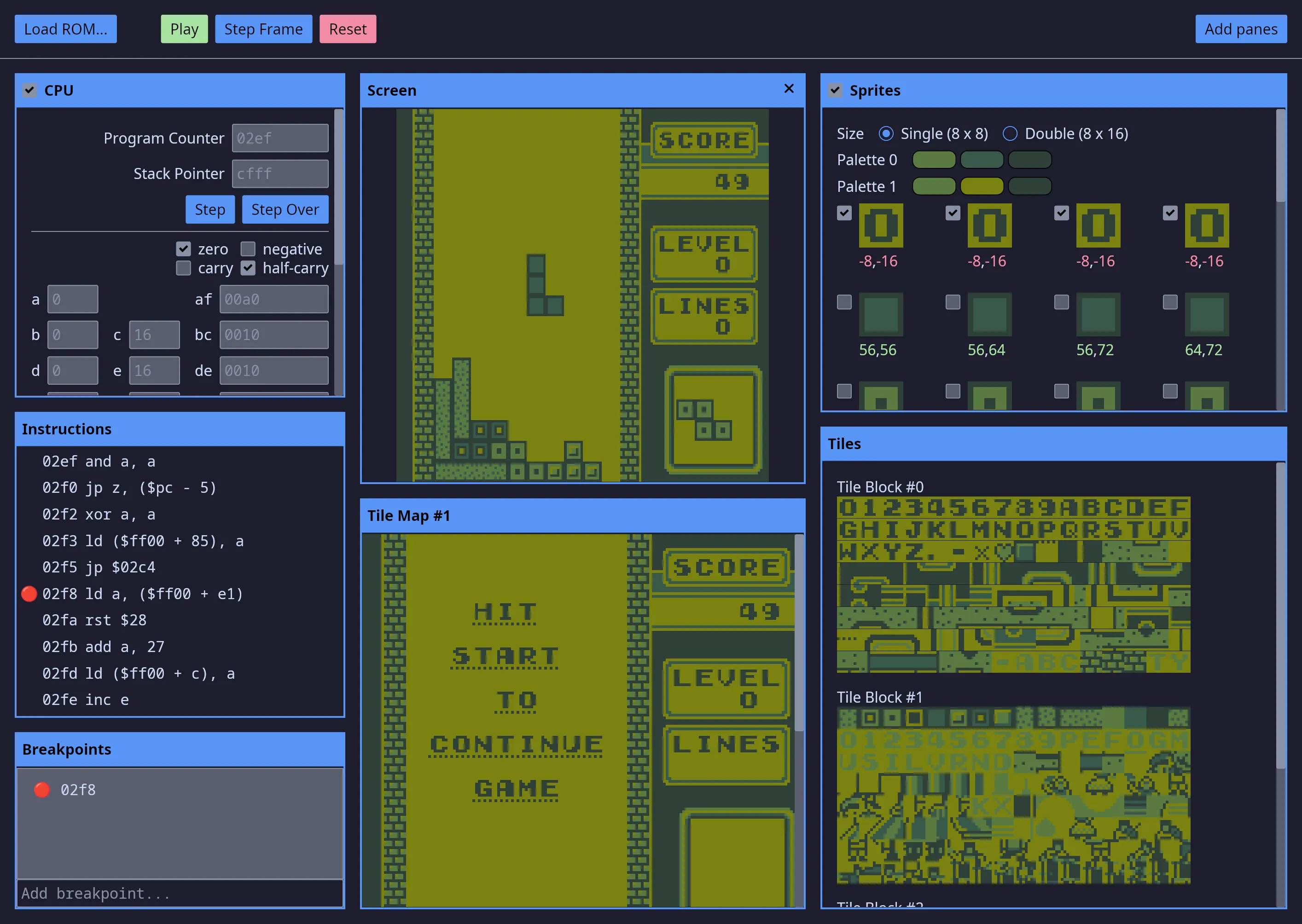
The tile viewer from Ruby Retreat had been genuinely useful. I wanted to see that kind of thing whenever I liked, alongside the sprites and all the other internals, and the best way to do that was to build a proper debugger into Missingno. Breakpoints turned out to be the most useful part: I could stop at the last point I was confident was right, then step carefully through the next few instructions. NO$GMB had shown me the assembly and registers as a kid, and I guess I’d always felt like emulators should have debuggers.The tile viewer from Ruby Retreat had been genuinely useful. I wanted to see that kind of thing whenever I liked, alongside the sprites and all the other internals, and the best way to do that was to build a proper debugger into Missingno. Breakpoints turned out to be the most useful part: I could stop at the last point I was confident was right, then step carefully through the next few instructions. NO$GMB had shown me the assembly and registers as a kid, and I guess I’d always felt like emulators should have debuggers.
Just over two weeks after I’d started again, Missingno was drawing Tetris’s sprites and reading the buttons, and I could sit down and play a full game on my own emulator. It was silent, and it only played Tetris, but it was working and it was mine.Just over two weeks after I’d started again, Missingno was drawing Tetris’s sprites and reading the buttons, and I could sit down and play a full game on my own emulator. It was silent, and it only played Tetris, but it was working and it was mine.
Missingno’s debugger in April 2025, the week Tetris became playable.
It wasn’t long after that I landed a new job, and I showed off Missingno in the interview. The job was a better fit for me, and for once I had some time and energy left over for hobby projects, at least sometimes. Progress was sporadic, and I decided that was fine. I just wanted to keep checking in with Missingno rather than abandon it, not after it was finally doing something. Through the rest of the year I chipped away at compatibility, with halting and memory bank controllers for bigger cartridges, along with some refactoring and reorganisation.It wasn’t long after that I landed a new job, and I showed off Missingno in the interview. The job was a better fit for me, and for once I had some time and energy left over for hobby projects, at least sometimes. Progress was sporadic, and I decided that was fine. I just wanted to keep checking in with Missingno rather than abandon it, not after it was finally doing something. Through the rest of the year I chipped away at compatibility, with halting and memory bank controllers for bigger cartridges, along with some refactoring and reorganisation.
I had a Tetris emulator, but I wanted a Game Boy emulator. Still, decades after printing out the Pan Docs, I’d hit a major milestone, even if I hadn’t reached my aspirations yet.I had a Tetris emulator, but I wanted a Game Boy emulator. Still, decades after printing out the Pan Docs, I’d hit a major milestone, even if I hadn’t reached my aspirations yet.
The itch was still ticking away, though, because I love to understand how things work, and a working emulator core was only ever meant to be the beginning. With one, I could embed it in other programs, really pull games apart and do interesting things with them. The vision I’ve held in my head all along is Pokémon Red, but with Ken Sugimori’s watercolour art, the kind I once had taped to my walls.The itch was still ticking away, though, because I love to understand how things work, and a working emulator core was only ever meant to be the beginning. With one, I could embed it in other programs, really pull games apart and do interesting things with them. The vision I’ve held in my head all along is Pokémon Red, but with Ken Sugimori’s watercolour art, the kind I once had taped to my walls.
It wasn’t until early 2026, when agentic technology had matured enough to be useful to me, that the project entered its next phase.It wasn’t until early 2026, when agentic technology had matured enough to be useful to me, that the project entered its next phase.